


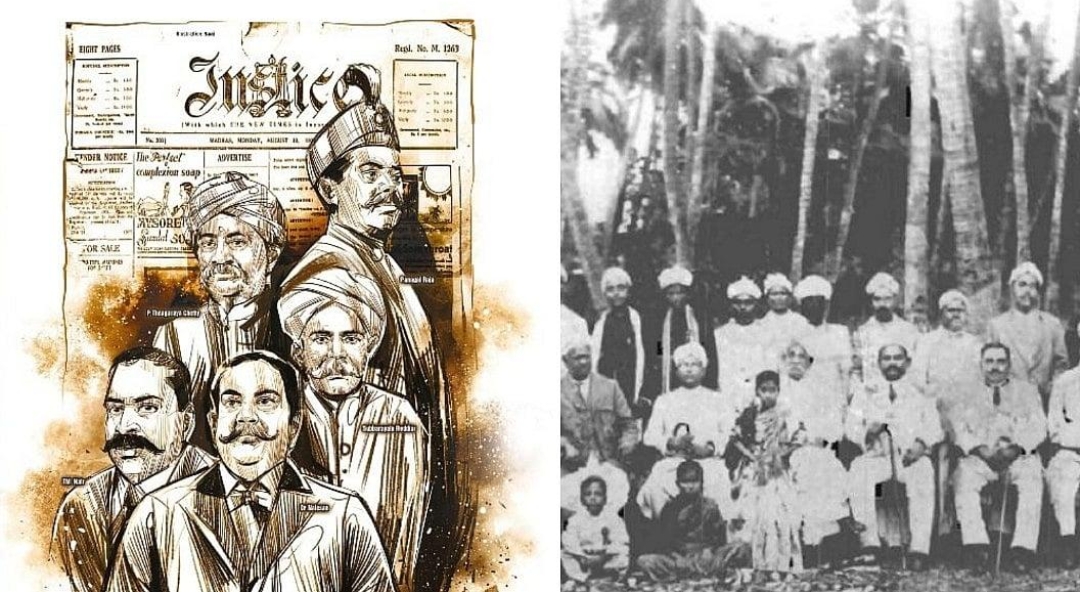
The Dravidian Movement holds a significant place in Indian political history for transforming social justice, the abolition of caste discrimination, reservation, educational rights, self-respect and linguistic rights into a powerful political movement. Its historical journey began with the formation of the South Indian Liberal Federation, popularly known as the Justice Party, in 1916. Dr. C. Natesa Mudaliar, Dr. T.M. Nair and Sir Pitti Theagaraya Chetty were among its pioneering leaders. They raised a strong political voice against the domination of particular communities in administration, education and employment, demanding equal opportunities and representation for all sections of society. Thanthai Periyar subsequently took the struggle for social justice to a new level. Through the Self-Respect Movement, which he launched in 1925, he challenged caste domination, superstition and the oppression of women, paving the way for a radical social transformation. The contributions of leaders such as W.P.A. Soundarapandian Nadar were also significant in this historic journey.
As a continuation of the political and social ideals of the Justice Party and the Self-Respect Movement, the Justice Party was transformed into the Dravidar Kazhagam at the Salem Conference in 1944. Subsequently, differences emerged over the question of taking the Dravidian movement directly into electoral politics. On September 17, 1949, under the leadership of Perarignar C.N. Annadurai, the Dravida Munnetra Kazhagam (DMK) was founded. Alongside Anna, leaders such as Kalaignar M. Karunanidhi, Professor K. Anbazhagan, Navalar V.R. Nedunchezhiyan and E.V.K. Sampath strengthened the political journey of the Dravidian Movement. Through speeches, writings, theatre, cinema and journalism, they took the principles of social justice and self-respect to the people.
The DMK’s Second State Conference, held in Tiruchirappalli in 1956, became a major turning point in Tamil Nadu’s political history. A vote was conducted at the conference to decide whether the party should contest elections, and the decision was taken to enter electoral politics. Accordingly, the DMK directly entered the electoral arena for the first time in the March 1957 General Elections. Since the DMK was not yet a recognised political party with an official election symbol, its candidates contested as independents. Out of the 205 Assembly constituencies, DMK-backed candidates contested in 117 constituencies. Their campaign went beyond the demand for a separate Dravida Nadu and highlighted social justice, economic equality, the welfare of poor and marginalised people, and the protection of Tamil language and identity.
In the 1957 election, the Congress Party won 151 Assembly seats and retained power. However, the DMK, contesting an election for the first time, won 15 Assembly constituencies and two Lok Sabha seats, emerging as a powerful political force in Tamil Nadu. Perarignar Anna won from Kancheepuram and entered the Legislative Assembly for the first time. Kalaignar M. Karunanidhi won from Kulithalai, beginning his historic legislative journey. Professor K. Anbazhagan contested as an independent candidate from Chennai Egmore and won. E.V.K. Sampath and other prominent DMK leaders also secured electoral victories. Although the 15 DMK legislators were officially recorded as independents in the election records, they represented the Dravida Munnetra Kazhagam and its political ideology in the Assembly.
The victory of 15 legislators in 1957 was much more than an electoral achievement. It marked the beginning of popular electoral recognition for the social justice principles championed by the Dravidian Movement over several decades. Anna raised the concerns of ordinary people and the rights of the State with conviction in the Assembly. Kalaignar Karunanidhi established his own political identity through his powerful legislative speeches and political activities. Professor Anbazhagan and other leaders carried forward the ideological strength of the movement. In the 1962 election, the DMK increased its strength to 50 Assembly seats. In 1967, under Anna’s leadership, the party captured power in Tamil Nadu, creating a historic political transformation. The journey of social justice that began with the Justice Party continued through Periyar’s Self-Respect Movement, Anna’s political leadership and Kalaignar’s contribution to governance. The 1957 election remains an unforgettable milestone in that history. The Dravidian Movement is not merely the story of electoral victories; it is the political history of generations of struggle for the rights, dignity and equality of the oppressed and marginalised people.
#DravidianMovement #JusticeParty #ThanthaiPeriyar #DrNatesaMudaliar #TMNair #PittiTheagarayaChetty #SoundarapandianNadar #PerarignarAnna #KalaignarKarunanidhi #ProfessorAnbazhagan #1957Elections #DMK #SocialJustice #SelfRespectMovement #TamilNaduPoliticalHistory #SouthIndianVoice


