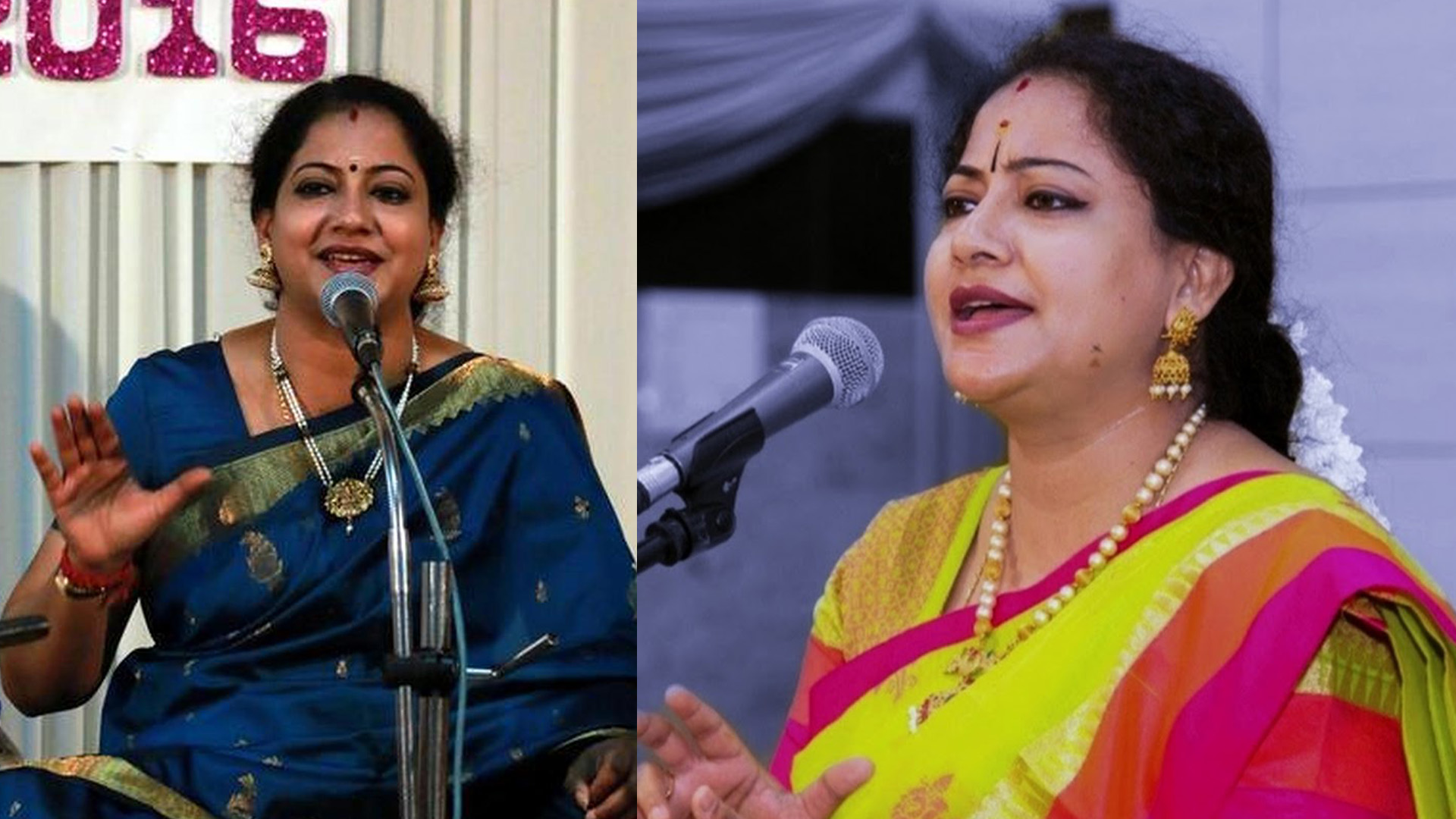
Some voices are born for the ears… some voices are born for the heart… and some voices are born to travel beyond time and become part of our memories. In the world of Carnatic music, listening to the voice of Salem Gayathri Venkatesh creates an experience that belongs to that third category. When a raga flows through her voice, it does not feel like merely a combination of musical notes; it feels as though an old door of memory is slowly being opened. As the tala moves forward, the mind seems to travel along with it. And when a kriti begins, the emotions hidden within its words gradually come into the light.
Carnatic music is not an art that can be mastered in a day, a year, or even within a single generation. It is a lifelong journey. Gayathri took her first steps on that journey many years ago. Her grandmother, Rajammal, was herself well-versed in music and had learnt from the violin maestro Kumbakonam Rajamanikkam Pillai. It was in this musical atmosphere that the talent hidden in young Gayathri’s voice was first recognised. To identify the potential of a future artiste in the voice of a child is no ordinary gift. That early recognition eventually grew into a long and remarkable musical journey.
The music she heard through her grandmother gradually became the music she learnt from her gurus. Her early training began under Ethapoor Srinivasan. She later had the opportunity to learn the finer aspects of music from Sulochana Pattabhiraman. She subsequently underwent advanced training under Professor T. R. Subramaniam, an accomplished exponent of the deeper dimensions of Carnatic music, including raga, tanam and pallavi. Each guru opened a new door in her musical world. As Gayathri walked through those doors, her voice gradually developed an identity of its own.
A melodious voice is a gift. But preserving and strengthening that gift requires years of dedicated practice. Singing a raga may appear simple from the outside, but touching the very soul of a raga is an entirely different art. Singing a note correctly is a skill; carrying emotion to the listener through that very note is artistry. In Gayathri’s musical journey, one can see the long path of discipline and sadhana that lies between these two.
Descriptions of her music have often highlighted the richness and sweetness of her voice. Yet the strength of a Carnatic vocalist cannot be measured by sweetness alone. Behind a powerful musical voice lies an understanding of sahitya, sensitivity to raga, command over tala, imagination and years of uninterrupted practice. In this sense, Gayathri’s music reflects a deep respect for tradition while also carrying her own individual artistic expression.
Securing first place in All India Radio music competitions was one of the early recognitions of her musical ability. She later received an ‘A’ grade directly from All India Radio. In the world of music, such recognition is more than just a certificate. It represents the acknowledgement of years of learning, practice and performance. Yet Gayathri did not stop with recognition. The stages increased, the concerts increased, and so did the circle of listeners who began to appreciate her music.
Her musical journey was also marked by several awards and honours. These included the ‘Gandharva Vidhyadhara’ award from Isai Pani Manram in 2002, the Youth Excellence Award from the Rotary Club in 2004, and the ‘Isai Vallar’ award from the Madras Connoisseurs’ Club in 2006. An award may bring happiness to an artiste on the day it is received, but the next morning the artiste must once again sit before the tambura and continue the practice. Awards are not stopping points in a musician’s journey; they are milestones along the road to the next destination.
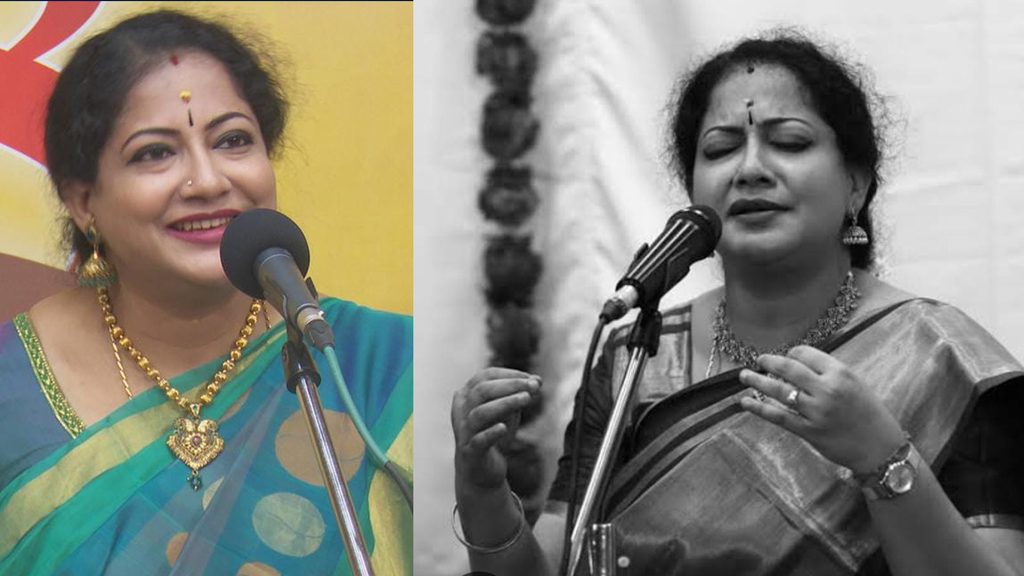
Her concert in Hyderabad also became one of the memorable moments in her musical journey. The programme, organised by Kalasagaram, featured B. Ananthakrishnan on the violin and Madipakkam Suresh on the mridangam. A Carnatic concert is not merely the voice of the vocalist. It is a musical conversation between the singer and the accompanying artistes. The response of the violin, the rhythmic strength of the mridangam and the voice of the vocalist come together to create a complete musical experience. On that stage too, Gayathri’s voice found its way to music lovers.
Her journey did not stop with performing music. She also sought to understand music in greater depth. She pursued higher education in music, including her M.A. and M.Phil., and later continued her doctoral research. Bringing art and education together, rather than keeping them apart, became another significant dimension of her musical life. For an artiste, understanding the history, grammar, aesthetics and traditions of music can add another layer of depth to artistic expression.
Yet there is another responsibility that extends beyond the concert stage—the responsibility of shaping the voice of the next generation. Gayathri has been involved in teaching students who wish to pursue music as a full-time career and has also supported the musical education of children. When an artiste’s voice ends with the artiste, it remains an individual achievement. But when that voice begins to live through another generation, it becomes a tradition.
The little girl’s voice once heard and recognised by her grandmother, Rajammal, has today travelled across numerous stages. The notes she learnt while sitting before her gurus have blossomed into ragas before audiences. From the small spaces where she practised during her formative years to the larger stages of Carnatic concerts, Gayathri’s journey is a musical story of how a voice is shaped through discipline, learning and perseverance.
At the beginning of a Carnatic concert, the auditorium is often wrapped in silence. Only the gentle sound of the tambura begins to fill the space. Then a single note is born. That note calls another note. Together, they become a raga. The raga becomes emotion. The emotion settles in the heart of the listener. At that moment, the separate identities of singer, song and listener seem to disappear, leaving only music.
It is within that world of music that Salem Gayathri Venkateh’s voice continues its long journey. The musical heritage received from her grandmother, the knowledge gained from her gurus, years of personal sadhana, education, stage experience, the affection of rasikas and the music she shares with her students—all these have shaped her path as an artiste.
Time changes. The ways in which people listen to music change. Stages change. Technology changes. But the soul of a raga does not change. The life within tala does not change. And the beauty of a voice born from sincere dedication remains timeless.
That is why certain voices do not leave us when a concert ends. They continue to resonate within us. A raga heard on one evening may return to our thoughts many days later. A particular sangati may unexpectedly come alive in our memory. And without our realising it, a voice may become a part of our own memories.
The musical journey of Salem Gayathri Venkatesan is one such long journey of sound and emotion.
It is not merely the story of a vocalist…
It is the story of music travelling from one generation to another.
It is the story of a tradition passing from the hands of a guru into the voice of a disciple.
It is the story of that magical moment when a raga is born on stage and finds a permanent home in the heart of a listener.
Ragas may continue to change…
Talams may continue to move…
Stages may continue to change…
But true music never really ends.
It begins in one voice and continues to resonate in a thousand hearts.
And along that timeless musical journey, the voice of Salem Gayathri Venkatesh continues to travel…
Through ragas…
Through talas…
Through the endless path of music.