
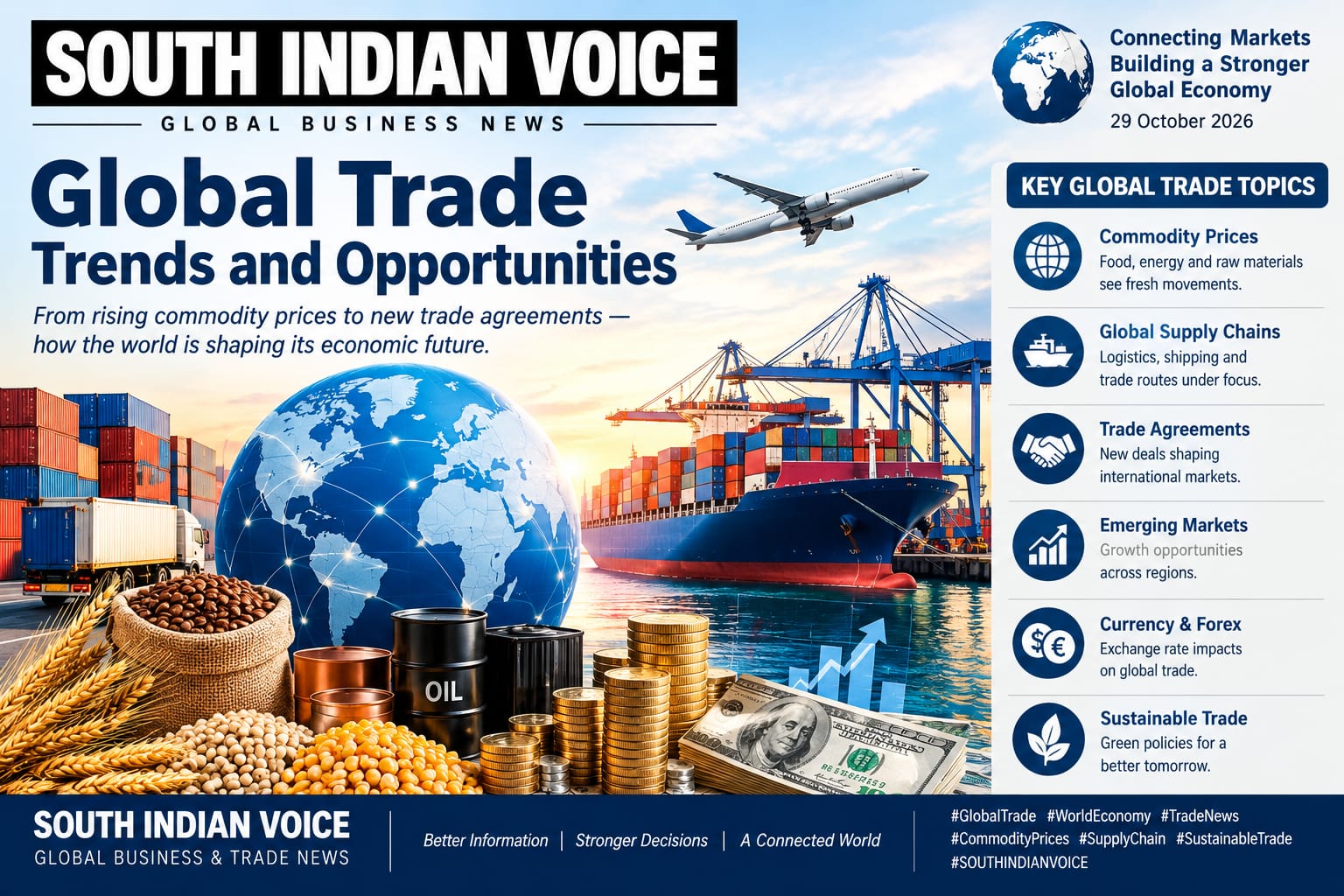
Amid growing uncertainty in the global economy, the World Trade Organization (WTO) has emphasized the need to strengthen international trade and create new market opportunities for developing countries. The WTO’s Global Review 2026, scheduled for October 29–30, focuses on strengthening partnerships between trade and development. One of the key objectives is to transform trade opportunities into economic growth, employment and improved livelihoods.
WTO Director-General Ngozi Okonjo-Iweala has highlighted the importance of improving infrastructure, technological capabilities, skills and institutional support to help developing countries compete in global markets. Simply having access to international markets is not enough; countries must also possess the resources and capabilities needed to benefit from those opportunities. Smaller economies, in particular, need to strengthen their participation in international trade while pursuing reforms that support their development.
According to information presented by the WTO, approximately US$795 billion has been invested through the Aid for Trade initiative over the past two decades. The initiative aims to help developing countries and least-developed countries improve infrastructure, build trade-related skills and strengthen institutions. However, Africa accounts for approximately 3% of global exports, while least-developed countries account for around 1%. These figures highlight continuing concerns about whether international trade assistance and investment are translating into broader economic progress.
Meanwhile, fluctuations in commodity prices, rising transportation costs and disruptions to global supply chains continue to pose challenges for international business. According to the United Nations Food and Agriculture Organization (FAO), the global Food Price Index rose by 1.5% in September 2026 compared with the previous month. Weather-related concerns and shipping disruptions in the Black Sea region also affected international grain markets, particularly wheat. Such developments can increase import costs for dependent economies and create additional uncertainty for businesses involved in international trade.
Strengthening global trade requires cooperation among governments, private companies, investors and international institutions. Efficient ports, improved road and rail networks, digital trade facilities, workforce training and simplified customs procedures can help developing countries expand their export capabilities. It is equally important to improve access to international markets for small and medium-sized enterprises, enabling them to participate more effectively in global supply chains and benefit from cross-border business opportunities.
Ultimately, the future of global trade will depend not only on the volume of exports and imports but also on how the benefits of trade are distributed. Fairer market opportunities, resilient supply chains, sustainable investment and transparent international trade rules can help ensure that the benefits of economic growth reach more people. How countries respond to these challenges will play a significant role in shaping the next phase of global commerce.
SOUTH INDIAN VOICE | GLOBAL BUSINESS NEWS
#SOUTHINDIANVOICE #GlobalTrade #WorldEconomy #WTO #TradeNews #InternationalTrade #GlobalMarkets #SupplyChain #TradeAndDevelopment #EmergingMarkets #ExportImport #EconomicGrowth