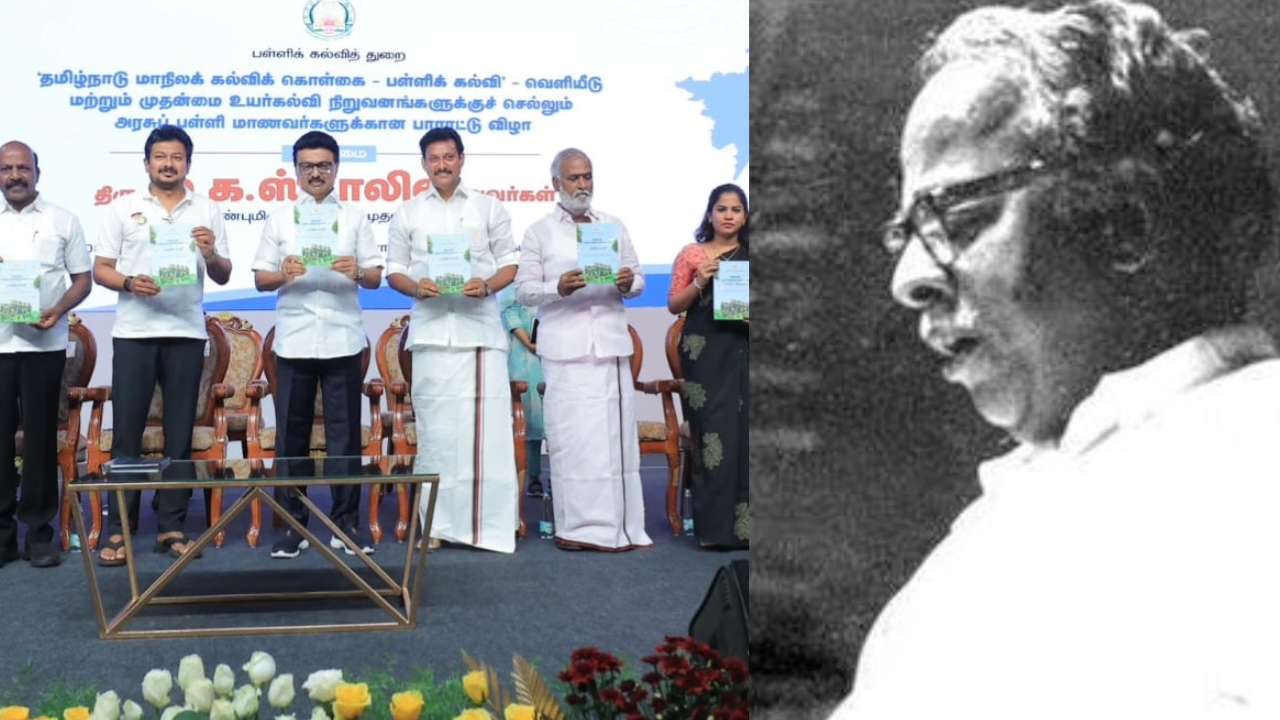
The Tamil Nadu government has unveiled its much-anticipated state education policy, placing the late C.N. Annadurai’s iconic two-language formula at its core and firmly rejecting the Union government’s National Education Policy (NEP).The move marks a direct challenge to the Centre’s push for uniform education reforms, particularly provisions viewed in the state as indirect Hindi imposition and unnecessary standardised examinations.Centre–State Tensions Fuel the BackdropSince the Bharatiya Janata Party (BJP) assumed power at the Centre, political observers and civil society groups in Tamil Nadu have alleged a steady erosion of state rights. While these tensions were less visible under the AIADMK government led by Edappadi K. Palaniswami, they have surfaced prominently since the Dravida Munnetra Kazhagam (DMK) under Chief Minister M.K. Stalin came to power.Public perception, political analysts say, is that the Union government has adopted a “discriminatory” stance towards the state, particularly in fiscal and policy matters. Education, they note, has become a flashpoint in this wider tug-of-war.Education as a Political BattlefieldThe NEP’s proposals for board exams in Classes 3, 5, and 8, along with the perceived promotion of Hindi in curricula, have drawn sharp criticism from Tamil Nadu’s educationists and policymakers. Critics argue these measures undermine the state’s carefully built education framework, which has consistently outperformed most of India.According to national data, Tamil Nadu’s higher education enrolment rate is comparable to that of the United States. The state surpassed the national target of a 50% Gross Enrolment Ratio years ahead of schedule—a key reason the DMK government believes sweeping changes from Delhi are unnecessary.Stalin’s Firm RebuttalChief Minister Stalin has repeatedly declared that Tamil Nadu will “never” accept the NEP. “We have our own path, rooted in our history, culture, and the needs of our students,” he told the state assembly earlier this year.The release of the state’s education policy last week is the culmination of months of consultations with academics, teachers, and civil society groups.Key Highlights of the PolicyThe Tamil Nadu State Education Policy retains several distinctive features that depart from the NEP framework:Two-Language Policy – Tamil and English remain the sole languages of instruction in the state’s public education system.No Board Exams for Classes 3, 5, and 8 – The move aims to reduce exam stress and preserve flexibility in early education.Abolition of Class 11 Board Exams – Intended to ease the psychological burden on students and improve learning outcomes.Continuity Across DecadesThe DMK has championed the two-language policy for over half a century, both in rhetoric and practice. The new state policy, party leaders say, cements this legacy in official form.“This is not just about language—it is about autonomy,” a senior education department official told The South Indian Voice. “Tamil Nadu has the right to decide what works best for our students.”Defending the ‘Dravidian Model’Political analysts view the policy as a reaffirmation of the so-called Dravidian Model of governance—a philosophy that blends social justice, state rights, and welfare-driven development. By institutionalising the two-language policy, the government signals that it intends to resist any moves towards centralised control of education.Looking AheadWhile the NEP continues to be rolled out in other states, Tamil Nadu’s stance could inspire similar resistance elsewhere, especially in regions wary of cultural homogenisation. For now, the state government appears determined to chart its own course, ensuring that Annadurai’s half-century-old vision remains not just relevant, but foundational.DHRAVIDA JEEVA