


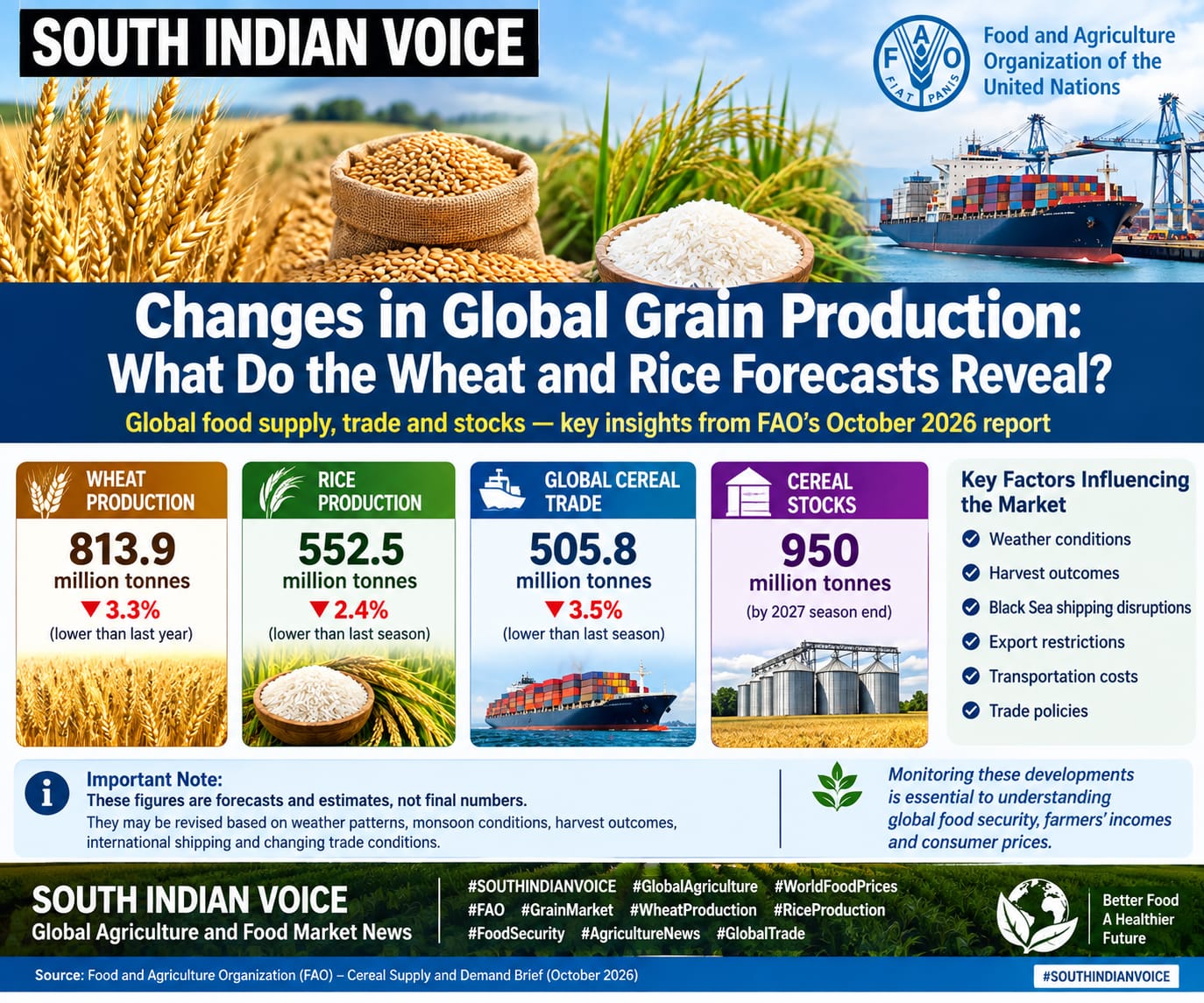
Global production and trade trends in wheat, rice and other cereals remain crucial to the international food market. According to the October 2026 Cereal Supply and Demand Brief released by the United Nations Food and Agriculture Organization (FAO), forecasts for global cereal production, trade and stocks indicate several important changes. These figures provide valuable insights into the future of global food security and agricultural markets.
Global wheat production in 2026 is forecast at 813.9 million tonnes, approximately 3.3% lower than the previous year. However, this estimate may change depending on weather conditions, crop development and harvesting outcomes. Changes in wheat production can influence international market conditions for wheat flour and other wheat-based food products.
Regarding rice production, global output in the 2026–27 season is estimated at 552.5 million tonnes. This represents a 2.4% decline from the record production level achieved in the previous season. According to the FAO, below-average or unevenly distributed monsoon rainfall in India has affected the rice production outlook. As one of the world’s major staple foods, rice plays a significant role in global food security, and changes in its production can have important implications for international rice-importing and exporting countries.
Global cereal trade in the 2026–27 season is forecast at 505.8 million tonnes, a decline of 3.5% compared with the previous season. Disruptions to shipping and transport in the Black Sea region could affect exports of wheat, maize and other cereals. Such obstacles to international trade may increase procurement costs for importing countries and influence food market conditions, depending on supply availability and transportation expenses.
Global cereal stocks are projected to reach 950 million tonnes by the close of the 2027 season. Cereal stocks are an important indicator of the world’s capacity to meet future food requirements. However, stock levels alone do not determine food prices. Production, consumption, transportation costs, export restrictions, weather conditions and national trade policies also influence market prices. These forecasts should therefore be viewed as important indicators of the global food market rather than as definitive price predictions.
It is important to note that these figures for wheat and rice production, global cereal trade and cereal stocks are forecasts and estimates, not final figures. They may be revised depending on weather patterns, monsoon conditions, harvest outcomes, international shipping and changing trade conditions. Continuous monitoring of these developments is essential to understanding global food security, farmers’ incomes and consumer prices.
SOUTH INDIAN VOICE | Global Agriculture and Food Market News
#SOUTHINDIANVOICE #GlobalAgriculture #WorldFoodPrices #FAO #GrainMarket #WheatProduction #RiceProduction #FoodSecurity #AgricultureNews #GlobalTrade #FoodInflation #Farmers #GlobalFoodSupply #AgriculturalMarkets


