


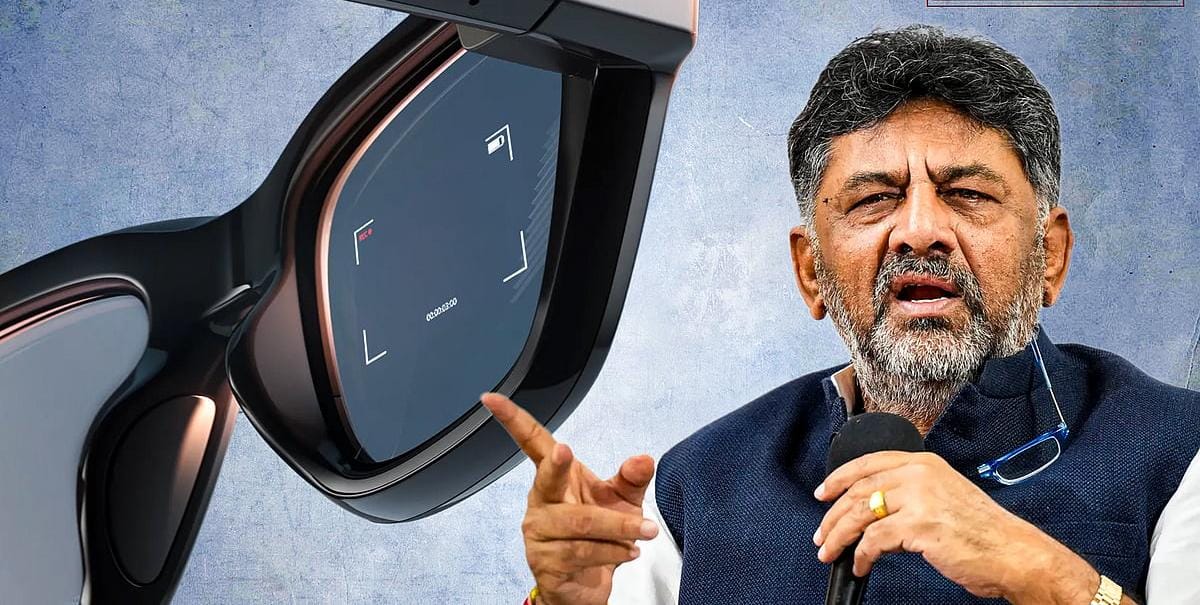
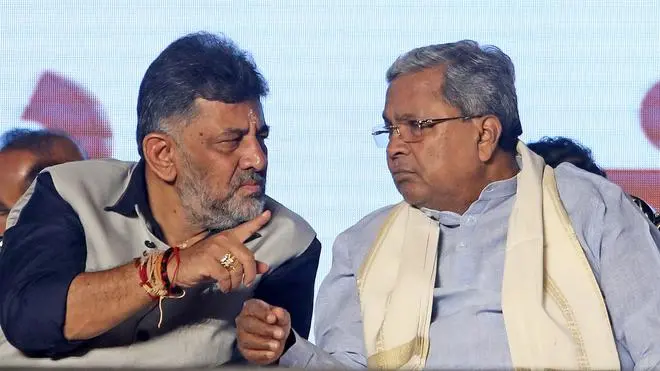
A political controversy has erupted in Karnataka over an alleged sting operation targeting Chief Minister Siddaramaiah. Deputy Chief Minister DK Shivakumar has also come into the spotlight amid reports of a mysterious recording involving Meta smart glasses. The episode has raised several questions in political circles, particularly about the possibility of secret recordings being used in political manoeuvring. It has also renewed discussions about the internal power dynamics within the Karnataka Congress. However, key questions remain unanswered: Who conducted the alleged sting operation? Who was behind it? And what was the actual purpose of the recordings?
According to reports, the Chief Minister’s Office believes that the police have sufficient evidence to trace the origin and circulation of the tapes allegedly connected to the operation targeting Siddaramaiah. Investigators are expected to examine where the recordings originated, who created them and why they were circulated. Establishing the authenticity of the recordings and identifying the people responsible will be crucial to understanding the controversy. However, the belief that sufficient evidence exists does not, by itself, establish that the allegations have been proven. The facts must ultimately emerge through a proper investigation.
DK Shivakumar’s reported concerns about Meta smart glasses have added another dimension to the controversy. He has reportedly expressed suspicion about a businessman who met him while wearing Meta smart glasses, raising the possibility that conversations involving political matters could have been secretly recorded. According to reports, the interaction initially involved business-related discussions before moving towards election strategies and political issues. Shivakumar reportedly asked his office to look into the individual’s background after becoming suspicious. However, suspicion alone does not establish that a secret recording actually took place, and the relevant facts require independent verification.
Meanwhile, the alleged video controversy involving Siddaramaiah has generated fresh political debate within Karnataka. Questions have emerged about the authenticity of the recordings, the circumstances in which they were obtained and the motives behind their circulation. In an environment where political leaders frequently accuse one another of wrongdoing, it is essential to distinguish between political allegations and established facts. If private conversations were deliberately recorded and circulated to damage a political leader, the incident would raise serious concerns about privacy, political ethics and the misuse of technology. Any such allegations must be examined on the basis of credible evidence.
The episode has also highlighted growing concerns about the use of modern technology in political activities. Meta smart glasses resemble ordinary eyewear but can incorporate cameras and other recording capabilities. Their use in meetings involving politicians, ministers or public officials raises questions about consent and privacy if conversations are recorded without the knowledge of those involved. At the same time, wearing smart glasses is not, by itself, proof that someone has secretly recorded a conversation. Investigators must establish whether any recording took place, what it contains and whether the material was subsequently shared or used for political purposes.
Ultimately, the alleged sting operation targeting Siddaramaiah, the questions surrounding DK Shivakumar’s concerns about Meta smart glasses and the police investigation into the origin of the tapes have created a fresh political storm in Karnataka. Who was behind the alleged recordings? Were they part of a deliberate political strategy? And can investigators establish who created and circulated the material? These questions remain central to the controversy. Rather than drawing premature conclusions, the public must await verifiable evidence and the findings of the investigation. The answers could have significant implications for political accountability, privacy and the increasingly complex relationship between technology and power in Karnataka politics.


